

Brewing coffee at home might sound intimidating to some—even to me not too long ago! I had been comfortable with brewing French Press since my years WWOOFing in Australia and New Zealand, but had never thought to learn other ways to make coffee myself.
Until now. ;-)
If you’re not within walking distance of your favorite cafe (or just want to level up your home brewing game to make awesome coffee in your own kitchen), figuring out how to make great coffee at home can feel a little intimidating. The good news? With a few affordable tools and some simple techniques, you’ll be sipping coffee shop-quality brews from your kitchen in no time.
So, how do you make good coffee at home? It starts with the right equipment (and beans). Here are the easiest — aka BEST — ways to brew coffee at home we’ve found. Each varies in terms of cost, effort, and the qualities of the end brewed cup of coffee.
How to make good coffee at home
French Press
There’s just something about a French Press, huh?
Hailing from Italy (who knew?), this classic coffee brewing method is a favorite for small groups. I consider it a gateway drug to slightly more advanced brewing methods at home than an automated drip machine like the Bonavita 8 Cup.

Here’s how to make French press at home right the first time. First, you want awesome beans. These are the best beans for French press we’ve found. You want a coarse grind of your favorite beans and hot water temperature set at 195°F. Use a heaping tablespoon of ground coffee, ballpark 7-8 grams, per 200 ml of water used (roughly per cup). Start by pouring enough water to cover the ground coffee, wetting the coffee grounds and opening their bloom. Give it a quick stir then fill the water to your desired amount. Let it brew for 4-8 minutes depending on your taste preferences and how finely ground your coffee is (the finer the grind, the less time you need for your French press to brew to extract enough high quality flavor).
Push the plunger—ah yes, sweet satisfaction—doctor your cup, and voilà, the perfect French Press while brewing coffee at home.
- Pros: A more full-flavored brew with a deeper sweetness and syrupy body. Since there’s no paper filter in the process, you get a delightfully oily result.
- Cons: Sometimes I don’t need ALL that coffee, so it feels excessive. Plus handling all the grinds at the end can be a pain in the you-know-where.
- Equipment: Kettle, French Press, coffee grounds
- Get your own: We love the Stanley French Press for its thermal purposes
AeroPress
The AeroPress is my go-to and all time favorite method for brewing coffee at home. It’s an efficient use of coffee from grind to cup, and makes single-serving coffees in a relatively short amount of time. There are several kinds of AeroPress available today, and while they’re all good, we like the AeroPress Go most due to its portability.

Here’s how to use AeroPress at home to make coffee. You want a fine to medium-fine grind for your beans (~14 on a Baratza Encore) and your water at 185°F. Prepare your AeroPress by inserting the plunger into the holder and flipping the entire device upside down (this is called the inverted method and IMO, the only way to go). Pour roughly 15 grams of freshly ground coffee into the AeroPress and then pour your hot water to the brim. Let it sit for a few seconds to add the paper filter+cap combo right away—whether you skip this step or not ultimately depends on your taste preferences.
Flip ‘er over and push the plunger down as your coffee drips directly into your coffee cup. Magic!
- Pros: Easy to use, doesn’t waste any coffee, and I love that my brew isn’t scalding hot so I can add cream and drink it right away. 😍
- Cons: Can’t think of any except that you need a couple pieces of specific equipment, like specially-sized filters.
- Equipment: AeroPress system, AeroPress coffee filters
- Get your own: $40 on Amazon
Pour over (Kalita Wave, Hario V60, Chemex, etc.)
David swears that the pour over is the best way to brew coffee at home. I get it—if I ever go to a new coffee shop and I don’t trust their drip, I tend to default towards their pour over option. So why not learn how to make that magic ourselves?
Pour over coffee brewers have been the darling of the third wave coffee movement in the last few years, and now that we know how to make it at home, I feel less and less need to get a coffee shop fix.

So, how do you make good coffee at home with a pour over system? With the Kalita Wave, first heat the water to 205°F. You’ll want a medium grind (22 on our Baratza Encore); David recommends 23 grams of coffee. He always rinses the filter first, though if you don’t believe in paper taste, feel free to skip it. After that, you’ll put the brewer on a coffee scale; though not required, it’s super helpful. Here’s his take:
“You’ll want to bloom your grounds first. I typically use about 50-60g (mL) of water for that. Just pour it evenly over the grounds in the filter, and let it rise and fall. After about 30 seconds, you can do your initial pour. I typically do about 150 more grams of water. As that works through, I add the rest of the water in ~50g waves, making sure to pour evenly. You’ll keep pulsing until you get to your desired serving size, for me that’s typically 350mL (or grams, or for us American barbarians, 11oz).”
- Pros: Pour over’s slow and steady water distribution produces a more robust flavor profile than other methods for brewing coffee at home. (Yum!! Taste ‘dem beans!!) It can also be fun to make and the ability to brew it practically earns you star-barista status.
- Cons: There are many steps to follow when making your pour over, and you practically have to babysit the filter. No set it and forget it here, like with the Clever Dripper (more on that to come)
- Equipment: Kalita Wave Brewer, Filters, a carafe, a scale, a gooseneck/pour over kettle
- Get your own: $35 on Amazon
Drip coffee machine, like the Bonavita 8C
Drip coffee has been poo-pooed by coffee snobs over the last few years, but it is my belief that you can actually make good coffee with a standard drip machine. All that’s needed is for the Folgers to be far, far away—stored somewhere near the Keurig machine that you no longer want/need/like.
We’ve been deeply satisfied with our Bonavita 8Cup, though we considered other coffee brewers, like the OXO 8 Cup and the Moccamaster. We’re big fans of OXO coffee gear, but the Bonavita hit our sweet spot. We think it’s the superior coffee maker for the price (read our in-depth Bonavita coffee maker review).

Here’s a general guide on brewing coffee at home with a drip coffee machine.
Heat your water to between 195°F-205°F. The higher you go the better, but never use boiling water. Use a fine-medium grind coffee depending on your filter-type. According to Lifehacker, Flat Bottom Filters should use Medium and Cone Shaped Filters should aim for Medium/Fine.
Similar to French press, use a heaping tablespoon of coffee for every cup you intend to drink (even better, get more precise with a coffee scale). Use 6-7oz of cold, filtered water, likewise for every cup. Hit that auto start button and BOOM. *Drip drip drip.* Mmm.
This coffee machine is a huge upgrade to your everyday Mr. Coffee kitchen, and one of our top picks for coffee gifts for men.
- Pros: You can make coffee en masse and once you go through the initial starter steps, you can just waltz back over a few minutes later to a freshly prepared cup.
- Cons: Since it’s automated, the only real modifications you can make to your coffee cup is the grind size and actual coffee bean used.
- Equipment: Automated drip coffee maker
- Get your own: $190 on Amazon
Clever Dripper

The Clever Dripper is one of the most underrated ways to make great coffee at home. It looks like a pour over brewer, but it actually works like an immersion method—more in the French Press or AeroPress family.
That means your coffee grounds steep in hot water for a few minutes before draining into your mug, giving you a richer and more forgiving cup with far less babysitting than a traditional pour over.
Here’s how we brew the Clever Dripper at home: use a medium grind (around a 20 on a Baratza Encore), 20 grams of coffee, and 300 grams of water for roughly a 15:1 ratio. Add a filter, dump in the grounds, pour the hot water, and let everything hang out for around three minutes. Then place the brewer on top of your mug and let gravity finish the job. Easy cleanup, consistent results, and almost impossible to screw up.
- Pros: Rich flavor, low-effort brewing, easy cleanup, excellent for single cups.
- Cons: Best for one person at a time, plastic build isn’t exactly countertop eye candy.
- Equipment: Clever Dripper, #4 filter, kettle, grinder.
- Get your own: About $40 on Amazon
Hario Switch

The Hario Switch has become one of our fave brewers because it can be almost anything you want it to be. At its simplest, it’s basically a Clever Dripper wearing a V60 costume: close the valve, steep the coffee for a couple minutes, then place it on your mug and let it drain.
What makes the Switch more fun is that you can also use it as a true pour over, or mix immersion and pour over together. You can bloom with the valve closed, open it for the main drawdown, close it again halfway through, or follow one of the (countless!) recipes floating around YouTube.
It’s a brewer that lets beginners make excellent coffee right away while still giving coffee nerds plenty to obsess over later.
How to use the Hario Switch: We typically brew with about 20g of coffee, 320g of water, a medium grind (around 18-20 on a Baratza Encore), and water around 200-205°F, though the beauty of the Switch is that it responds well to experimentation.
- Pros: Versatile, forgiving for beginners, can brew immersion or pour over.
- Cons: Costs more than a V60, and all those recipe possibilities can send you down a YouTube rabbit hole.
- Equipment: Hario Switch, V60 filters, gooseneck kettle, grinder.
- Get your own: Around $35 on Amazon
Read our full Hario Switch review for our favorite recipes and brewing tips »
OXO Pour Over

The OXO Pour Over is one of our favorite “gateway” brewers for people who want better coffee without learning full coffee-nerd pouring technique. Its signature feature is the water tank that sits on top and slowly disperses water over the grounds for you. In other words: many of the flavor benefits of pour over, with much less standing there pretending you’re in a barista competition.
Shop gifts for someone *getting into* coffee »
To brew an Oxo pour over: place a #2 cone filter in the dripper, add medium-ground coffee (we’d start around 20 grams), set the reservoir on top, and fill it with hot water up to your desired line. Then walk away. It automatically drips through at a controlled pace while you handle more pressing matters, like existing before caffeine.
- Pros: Beginner-friendly, affordable, hands-off brewing, solid flavor, easy cleanup.
- Cons: Single-serve focused, less control than manual pour over, plastic construction.
- Equipment: OXO Pour Over brewer, #2 filters, kettle, grinder.
- Get your own: You can find this Amazon for ~$20 or buy it direct from OXO’s website here
Cold Brew
It’s safe to say we’re obsessed with making cold brew at home. Cold brew is the lazy genius of coffee brewing. Instead of using hot water and brewing in minutes, you steep coarse-ground coffee in cold or room-temp water for 12 to 24 hours. The result is a smooth, low-acid concentrate that’s ready whenever you are.

It’s ideal for hot weather, busy mornings, a quick afternoon shot, or anyone tired of making coffee from scratch every single day.
After reviewing several cold brew coffee makers, our go-to system is the Toddy Cold Brew Maker because it turns what can be a messy DIY process into something clean and repeatable. We start with 12 ounces of coarse coffee and 7 cups of filtered water, steep for around 14 to 18 hours, then drain into the included carafe.
When you’re ready to drink, dilute the concentrate roughly 1:1 with water, milk, or ice depending on how bold you like it. You can even use the Toddy Go Brewer if you want to have some on hand while traveling or camping.
- Pros: Make several servings at once, ultra convenient, smooth flavor, fridge-ready coffee for the week.
- Cons: Requires planning ahead, long brew time, can taste flat with low-quality beans or bad ratios.
- Equipment: Cold brew maker (Toddy, OXO, pitcher + filter), coarse grinder, storage container.
» Learn more: Our complete guide to cold brew
Cometeer
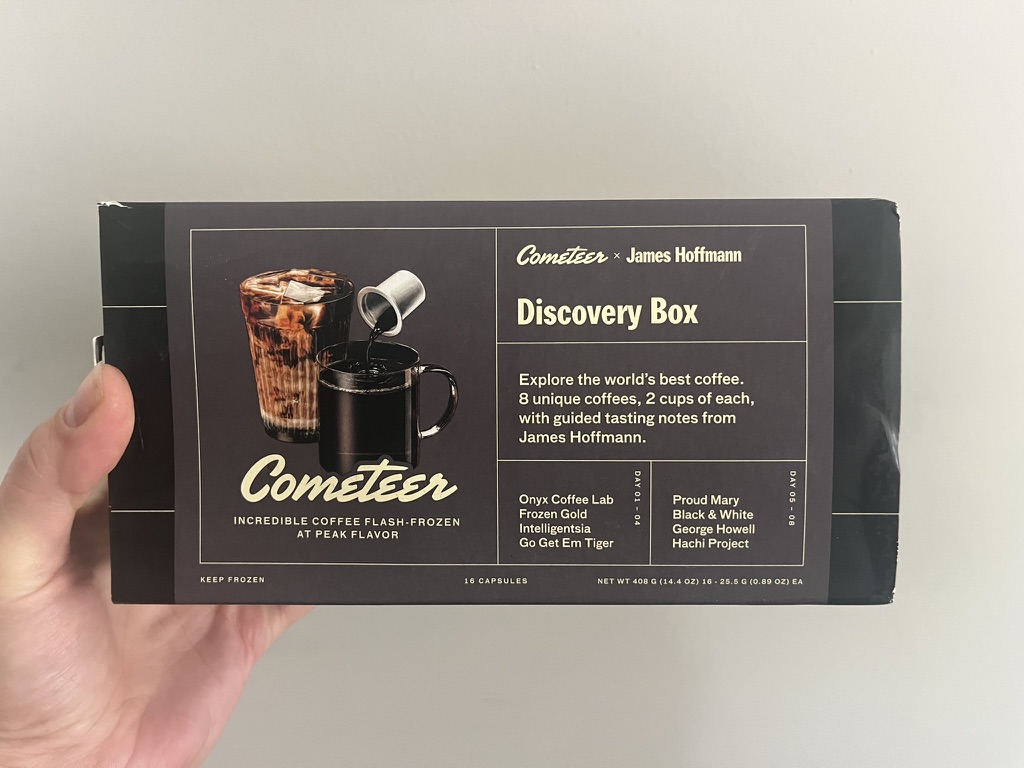
Cometeer is the strangest and most impressive shortcut in coffee right now. Instead of freeze-dried powder, it uses flash-frozen capsules of brewed specialty coffee concentrate. You drop one into a mug, add hot water, and get something shockingly close to a legit café cup in under a minute. We were skeptical too. Then we tried it.
Where Cometeer shines is convenience without fully sacrificing flavor. It’s ideal for busy parents, rushed mornings, or anyone who wants better coffee but has zero interest in grinding beans before sunrise. It also works over ice or with milk for instant iced coffee or lattes.
- Pros: Excellent flavor, ultra fast, no grinder or brewer needed, easy variety from top roasters.
- Cons: Expensive, frozen shipping/storage required, more packaging waste than traditional brewing.
- Equipment: Mug, hot water, freezer space.
- Get your own: Cometeer
» Learn more: Cold brew vs. iced coffee (Yes, there is a difference)
Instant Coffee

Instant coffee has come a long way from sad motel packets and office sludge. Good instant coffee today — especially freeze-dried specialty options from brands like Verve, Sightglass, Intelligentsia, Swift — can be genuinely solid when convenience matters most.
Is it as good as fresh pour over? Usually no. Is it way better than many people assume? Absolutely.
Just add hot water and move on with your life.
- Pros: Fast, portable, lightweight, no equipment needed, great for travel.
- Cons: Usually less nuanced than fresh brewed coffee, quality varies wildly, some brands still taste rough.
- Equipment: Mug, hot water, functioning pulse.
- Get your own: Here are the best instant coffees even coffee snobs can get behind

Other ways to make awesome coffee at home
- Moka Pot
- Cold Brew Maker
- Espresso Machine
- Manual Espresso Maker
- Siphon Brewer
- Vietnamese Phin Filter
- Percolator
- Single-Serve Pod Machine, like a Keurig
- Cowboy Coffee
Read our full run down in What are the Best Coffee Brewing Methods and Their Differences?
You’ve gotta have the right equipment
There’s no such thing as easy brewing coffee at home if you’re only armed with a sock as a filter and stale ground coffee. In order to make the most of brewing coffee at home, you have to invest in a few tools upfront. Like any hobby, you’ve gotta pay to play.
Someday, maybe you’ll end up in the same place that we never thought we’d be—we stay home to drink coffee the we love, we go out to coffee shops to enjoy the atmosphere and a change of scenery. And we save tons of money by making coffee at home.
Figuring out the best way to brew coffee at home for me has been a fun, and yes, caffeinated, adventure!

Essential coffee brewing tools for your home
We all love our favorite coffee shop in town and have a soft spot for that amazing local roaster. But sometimes it’s nice to wake up in the morning and brew a high quality cup of coffee while at home, still sleepy-eyed. But, how can you make your home brew coffee go from “fine” to “AMAZING!!” What pieces of coffee brewing equipment do you need to up your caffeine game at home?
As it turns out, you don’t need a full-on coffee shop to make your dreams a reality. There are only a few coffee making supplies to stock up on before you’ll be sippin’ pretty in no time. Remember: No one’s judging your bedhead when you make delicious coffee at home!
These coffee tools and equipment will put you on the right path towards delicious home-brewed coffee.
1. A coffee storage system
Coffee begins to lose its freshness as soon as its done roasting, and your beans’ arch nemeses are air, moisture, heat, and light. Unless you work through a pound of coffee beans at rapid-fire speed (i.e. two weeks or less), you want to invest in a coffee storage system beyond the bag it was purchased in. A coffee container whether made of glass, ceramic, or non-reactive metal, can put you on the right track. More than anything, your coffee storage solution should be airtight and opaque.

Remember to keep your beans out of the fridge/freezer (moisture is bad news) and stick to cool, dry places with these coffee storage containers (countertops work great!). We use the CoffeeVac for our coffee bean storage at home, but we’ve also heard great things about the following systems, too:
- Fellow Atmos Electric Vacuum Coffee Canister
- Airscape Coffee and Food Storage Canister, 64 oz
- Bean Envy Airtight Coffee Canister
2. A trusty kitchen scale
You can’t brew coffee at home well without the help of a coffee scale. Coffee outcomes depend heavily on bean weight accuracy. Since beans vary in size, it’s not recommended to use a “teaspoon” of coffee per “X oz of water,” or to determine the amount of coffee to grind based on “bean count.”
We’ve seen it all, but know that the easiest way to confidently brew a delicious cup of coffee on your own is to have your own digital kitchen scale. That’s why it’s one of the essential pieces of coffee brewing equipment to have at home!
We mostly brew with the Hario V60 Drip Scale. But we understand if the roughly ~$40 price point feels a little excessive to newbies. We like how accurate and user-friendly the scale is—you can even easily switch the measurements between grams and ounces (it’s our top pick after our hunt for the best coffee scales). We have our OXO Good Grips 11 Pound Stainless Steel Food Scale available as a backup, but it doesn’t measure to 0.1g as consistently and accurately as the dedicated coffee (versus “kitchen”) scale.
Without measuring exact amounts of beans, it is pretty hard to make a GREAT cup of coffee at home. Eye-balling and guessing is for the birds. Buy an electric scale that can switch between ounces and grams and ideally measures in decimals, not fractions.
Recommended electric scales:
- The OXO 6lb Scale with Timer
- Accuweight’s 207 Digital Kitchen Multifunction Food Scale for Cooking
- InEviFit’s 13lb Digital Kitchen Scale
3. A coffee grinder, ideally burr + electric
We all know not to buy pre-ground coffee, right? RIGHT! We’d hate for your coffee to go stale at home, so we highly recommend that you keep your coffee in bean-form until right before you’re ready to brew. This will not only improve the quality of the output significantly, but also help your beans stay fresher longer. You want to buy a grinder that’s ideally electric, has size variance (you can grind at size 20 for pour overs vs. size 14 for AeroPress, for example), and is a conical burr grinder.

Next point: No settling for electric blade grinders. It’s time you invest in either a hand burr grinder (takes more effort and elbow grease, but works great and is very portable—for future camping trips or travels!) OR upgrade to an electric burr grinder.
Why a conical burr grinder instead of an electric blade? I love David’s take on the debate between blade vs. burr coffee grinders:

“When you’re getting started in coffee making, most people make the chasm leap from buying ground coffee to grinding fresh with a blade grinder. These remain the most popular and best-selling coffee grinders, and for good reasons: they’re simple, they’re cheap, and they do the job well-enough.
But: Don’t let a coffee snob know you use a blade grinder… Snobs (like us, at times) look down their noses at blade grinders. The reason is simple: variability.” —Read more
Electric burr grinders will cost you more up front, but they will allow you to master brewing lots of different coffees at home (French Press, Aeropress, espresso, etc.). Thanks to the precision in its grind and the ease of switching between different grind sizes, an electric burr grinder can make your coffee making at home a more convenient experience. We talk more about the importance of variability when grinding coffee beans at home here.
We started out with a Burr Hand Grinder but quickly got tired of the extra elbow grease needed to grind the beans down daily (we put that in our camping coffee kit instead). We upgraded to the Baratza Encore (full review here) on Valentine’s Day in 2018 and have never looked back (yep, it’s still going strong all these years later).
Remember: Using fresh ground coffee is always worth the extra effort and will more closely replicate your coffeeshop experience at home.
Other high quality grinders to consider adding to your collection of coffee brewing supplies include:
Recommended coffee grinders:
- Capresso 560.01 Infinity Conical Burr
- Breville’s Smart Grinder Pro Coffee Bean Grinder
- OXO’s Conical Burr Coffee Grinder
- Baratza Encore (Read our in-depth product review)
- JavaPresse Manual Coffee Grinder with Adjustable Setting
- Hario Ceramic Coffee Mill – “Skerton”
And just for fun: Here’s a handy coffee grind size chart we use in our house because I personally haven’t memorized numbers since we all had land lines in the ’90s…

4. A hot water kettle, preferably electric
The next essential tool for making bomb coffee at home is a hot water kettle. To be more precise in both your ability to pour water consistently and to heat water to ideal temps for different coffee extraction methods, we have to recommend that you only consider electric, gooseneck kettles.
Similar to the need for exact coffee measurements, you also want to pay close attention to the exact temperature of the water that you’re using.
When looking for the perfect coffee kettle for your kitchen, make sure it checks off these boxes.
- It’s gooseneck (this allows you to control the pour more precisely).
- Its electric (cuts a few steps out of the water-heating process).
- It has variable temperatures (so you can easily heat to the preferred temp to achieve an optimized extraction for a given home brew coffee method). Reason #3 is essential in our home because I love to make AeroPress (recommended water temp of 185), whereas David’s brew of choice is pour over (recommended water temp of 205).
Our electric kettle makes the process of switching between brew methods uber easy, beyond the benefits the elongated gooseneck spout provides in steadying the water flow.

Our Bonavita Gooseneck Electric Kettle ticks off ALL the boxes and we’re super-satisfied with having it in our coffee making supplies. We’ve also used the Fellow Stagg EKG and mostly enjoyed it, though while it looked good, we found some ongoing annoyances (like persistent geysering depending on flow rate).
Read David’s in-depth Bonavita kettle product review here.
Recommended electric kettles:
- Bonavita Gooseneck Electric Kettle (Read our in-depth product review here) $$
- Willow & Everett Electric Gooseneck Kettle $$
- Fellow Stagg EKG, Electric Pour-over Kettle For Coffee And Tea
- OXO BREW Adjustable Temperature Electric Pour-Over Kettle
5. Your brew method of choice—AeroPress, Kalita Wave, Chemex, etc.
This is the fun part—it’s up to YOU to determine what coffee making supplies will result in the cup of ‘jo that makes it worth getting out of bed in morning. There are a bunch of different ways to prepare your coffee, so we recommend a healthy effort of trial-and-error to find which tools work for you.
We love trying and testing new ways to make coffee at home (that was why we started this website in the first place!), but have come to prefer a couple brew methods more than others. You can view my more in-depth analysis of the easiest at-home coffee brew methods here, but here’s the TL;DR version, in order from most-fussy to least-fussy:
- AeroPress
- Kalita Wave
- Chemex
- Bodum French press
- Bonavita Connoisseur 8-Cup One-Touch Coffee Maker (Full review)
Don’t forget to buy coffee filters for your coffee brewing at home, too!
You might also level up your skills by learning how to brew a Chemex or cold brew. Seize the opportunity to learn a new brew method with your increased time at home. Once you’ve got the hang of the few steps, you’ll be rocking your morning coffee routine in less than 10 minutes, easy.
Pro tip: Handle all of your coffee tools and equipment with care, lest you knock over your glass Chemex after only using it twice. ;'( LEARN FROM MY ERRORS!! Hehe
6. A mug that makes you happy
It might not be *100% essential* to your coffee tasting as good as a fresh pour from your favorite local haunt, but there’s something special about enjoying the vehicle as much as the contents. Especially during the pandemic, we need to find joy in small and simple ways, so we absolutely recommend that you drink your home-brewed coffee from a mug you love.

You can bet that we’ll be drinking ours from our fave double-walled mugs, but every now-and-then, we switch it up and drink from our Foxlee wedding favor mugs just for fun, too. 😊 If you commute or on the go frequently, check out our list of the best travel coffee mugs to keep coffee hot. (Spoiler: We love Klean Kanteen for performance, and the Owala coffee tumblers for performance + cuteness factors).
7. BEANS!
The final piece of the brewing-coffee-at-home puzzle is…. the coffee itself! You can buy lots of different coffees online or in your grocery store, or you might use this time to support those local roasters by purchasing freshly roasted beans straight from their shops. Once you learn how to make black coffee taste good, you’ll be off to the races. A big part of it is simply buying better beans, and our Trade Coffee Subscription helped us do just that.
For those new to buying beans, we recommend light roasts whenever possible so that you can better taste the flavor nuances. We also generally love single-origin roasts that are natural, versus wet, processed whenever possible.

Your basic kit for brewing coffee at home
There are a few standard kitchen items that most home coffee brewers will need to fill their cabinet space:
- Your coffee of choice. The more you start to tune into the nuances of coffee flavors and body, the more opinionated you’ll get about which roasters you love. Or maybe you’re hardcore Blue Bottle fans or lifelong supporters of your local roaster. Whatever floats your coffee boat, make sure you have those beans on hand! Try a coffee subscription box if you’re still in *discovery mode* when it comes to fave coffee roasters.
- A coffee grinder. You can opt for manual or electric, burr or blade, disc or conical. You can read more about our recommendations in this post: Why Fresh Ground Coffee is Worth the Extra Effort.
- Your preferred brewing tool. We’ll go into the different varieties of these further down in the post, but it is pretty essential that you figure out the best way to brew coffee at home for YOU and arm yourself with the equipment to do it.
- Filters. Depending your brew method, you might need a paper filter to get the job done.
- Your favorite coffee mug! Whether it’s a to-go thermos, something vacuum sealed, or the first cup you grab out of the collection, we trust you’ll find the right vessel for you.
- Your coffee accessories. Cream, sugar, butter, coconut oil, stevia, maple syrup, cinnamon, almond milk, peppermint oil, agave—whatever makes your cup of coffee come to life, have it nearby.
- Your smart phone, to capture the moment. Okay, totally kidding about this one. Or are we…?

The best coffee to make at home
Making great coffee at home starts long before you heat the water. Even the best brewer can’t rescue stale or poorly roasted beans.
If you’re shopping for coffee, here’s what we’d prioritize:
- Freshly roasted. Look for a roast date instead of an expiration date whenever possible.
- Whole beans. Grinding immediately before brewing makes a bigger difference than most equipment upgrades.
- Light to medium roasts. They tend to showcase more sweetness and origin character, while darker roasts emphasize roast flavors.
- Specialty roasters. You’ll usually find better sourcing and more interesting flavor profiles than what you’ll typically find at a supermarket.
Here are a handful of other roasters we love to order from direct or add to our Trade Coffee Subscription queue.
Dune Coffee (Santa Barbara, CA)


Dune feels like California in coffee form. Walking into one of their Santa Barbara-based cafés for a cortado before sunrise by the beach is one of my favorite coffee memories.
They somehow manage to make specialty coffee feel joyful instead of intimidating, and that same philosophy comes through in the coffees they roast: clean, expressive, and consistently delicious.
If you’re looking for a roaster that reminds you coffee is supposed to be fun, Dune is hard to beat.
Perc Coffee (Savannah, GA)


Perc is one of those rare roasters that doesn’t take itself too seriously while taking coffee very seriously. Their branding is playful, their bags practically jump off the shelf, and they always seem willing to roast something unexpected—from unusual origins (we’re still thinking about the bag of coffee we tried from Yunnan, China) to more experimental processing methods.
Madcap Coffee (Grand Rapids, MI)


Madcap will always be one of our Midwest favorites. We lived in Grand Rapids (“Grand Rabbits”) for a few years, and checking off visiting their cafes around the state became one of our favorite mini projects.
I *still* think about their seasonal latte program—it was the kind of menu that made you want to come back every few weeks just to see what they’d dreamed up next. That same creativity and attention to detail carries over into their roasted coffee.
These are three roasters we’d happily order from again tomorrow. But they’re only a tiny sample of what’s out there. That’s why we love Trade Coffee. It lets you discover dozens of independent roasters without having to guess where to start.
The best coffee subscriptions right now »
These coffee making tools are worth the investment
David did a great study on the ROI of home brewing coffee, and we found that even after the upfront investment in these different pieces of coffee brewing equipment, we were able to pay it off in less than three months!
We’re really happy with the set of coffee tools and equipment we’ve stocked our kitchen with (we even have a *slightly* ridiculous hutch dedicated solely to our coffee habit!).
There’s no excuse for not brewing coffee at home!

With the right combination of tools and time, you can become the master of home brewing coffee.
All that’s required is little upfront investment in new equipment and a quick review (or two!) of the steps necessary to make the brew, you’ll come to love making your new favorite cup of coffee from the comfort of your own home. Even for me, as a self-proclaimed cafe addict, learning these tricks has not only saved me $$$ (my coffee shop budget was high to begin with…), but it has made me better appreciate my favorite beverage in a new light.
What coffee making tools are we missing? We’re always trying to up our game, so we’d love to hear any feedback from fellow low-key coffee snobs!


Great tips! I’ve been trying to improve my home brewing, and this guide really simplifies the process. Makes me feel more confident experimenting with different coffee styles!